Blog

Rare Prints At The Blue Earth Lottery

September 2nd, 2010

Blue Earth is hosting our sixth-annual lottery-style fundraiser on September 30, 2010 at the UW Center for Urban Horticulture.

In addition to an exciting lottery and gourmet dinner, we are pleased to present special auctions featuring rare photographs from three world-class photographers: Phil Borges, Subhankar Banerjee, and Daniel Beltrá.

All attendees at the Blue Earth lottery are eligible to bid on any of these three rare, stunning framed works of art.


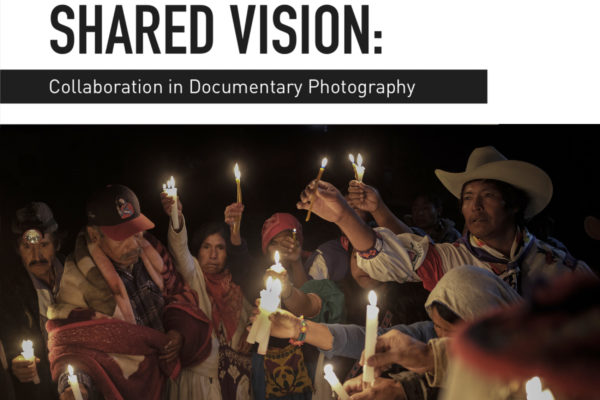
Palden, #4 of a limited edition of 40 by Phil Borges. Toned silver gelatin print, Shadow box framed at 23″ x27″. Retail Value $2,500

For over 25 years Phil Borges has been visiting and documenting indigenous and tribal cultures around the world. His award winning books have been published in four languages and his photographs have been collected and exhibited in museums and galleries worldwide.


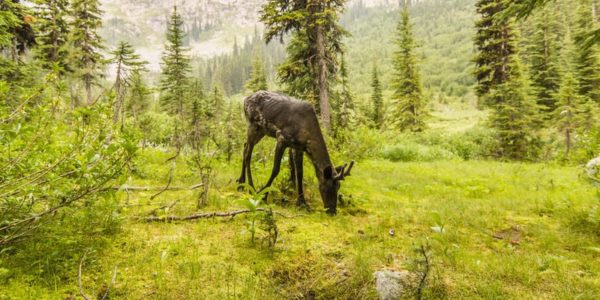
Bear Den II, 6/29, by Subhankar Banerjee. 31″ x 41″. Retail Value $8,000

Subhankar Banerjee’s ongoing collaboration with Gwich’in and Inupiat communities of Alaska and the Canadian Yukon focus on a tradition of sustainable land use practices that are disappearing rapidly from industrialized societies. Subhankar’s photographic documentation includes several regions of the American Artic, including the Arctic National Wildlife Refuge, the Kasegaluk Lagoon, and the Beaufort and Chukchi seas.


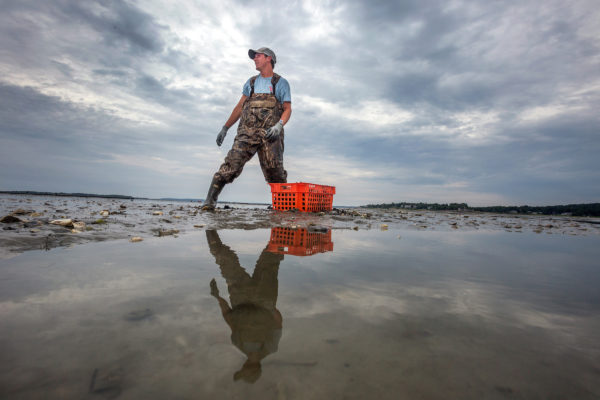
Amazon Drought, 2005, #2 of a limited edition of 15 by Daniel Beltrá. Digital pigment print. 24″ x 35″. Retail Value $3,000

Daniel Beltrá brings the sensibility and craft of a news photographer to the fields of nature and the environment, making images which he hopes will spur greater respect and conservation of those subjects. Daniel has received awards from the World Press Photo (WPP) and China International Press Photo contests for his work on drought in the Amazon. He was also awarded the Prince’s Rainforest Project Award given via the Sony World Photography Awards in April 2009.


Join us for the Blue Earth Lottery, an evening filled with fine art photography, gourmet food, and delicious wine, and take home a print donated by one of our world-class photographers.

Every lottery ticket holder is guaranteed a print for their collection.

Don’t miss the fun at our annual fundraiser gala! Seating is very limited. Order your lottery tickets today.

Blue Earth Accepts Four New Projects

August 30th, 2010

We are very pleased to announce the acceptance of four new projects: Choosing Hope: Reclaiming the Duwamish River - Tom Reese; Cameras without Borders: Photography for Healing and Peace - Eberhard Riedel; Sufis: Messengers Of Peace - Amit Mehra; Toxic Water, Poisoned People: When Mountains Fall To Pay For Coal - Paul Corbit Brown.

Everyone at Blue Earth wishes to congratulate our new project photographers! We very much look forward to working together to further their projects highlighting these important issues.


Choosing Hope: Reclaiming the Duwamish River - Tom Reese.

Choosing Hope: Reclaiming the Duwamish River - © Tom Reese.

“The Duwamish River can be hard to love, but it flows powerfully through the hearts of those who know it well. The Duwamish is one of earth’s vital arteries conveying lifeblood from mountains to the sea, so it can be difficult to accept that its lower 5½ -mile stretch has been turned into one of the most toxic waste environments in the United States - an industrial sewage canal flowing out past the scenic waterfront of Seattle.”


Cameras without Borders: Photography for Healing and Peace - © Eberhard Riedel.

Cameras without Borders: Photography for Healing and Peace - © Eberhard Riedel.

“Recurrent racism, tribalism and fundamentalist ideology are tearing apart the human fabric. I work with peoples in Africa whose ways of life are under assault and who are suffering the consequences of violence, war and discrimination. This includes the Bushman of Southern Africa and Pygmy in Uganda and Congo, who are among the oldest inhabitants of Africa.”


Sufis: Messengers Of Peace - © Amit Mehra.

Sufis: Messengers Of Peace - © Amit Mehra.

“Post 9/11, the general perception to Islam has been quite negative but what needs to be understood is the much larger picture of communal amity it stands for. It is a unique topic, which hopes to enlighten people about the inherent concept and nature of Sufism, the middle path in Islam, as a harmonious philosophy highlighting the benevolence of Islam; an aspect critical to its comprehension in these troubled times.”


Toxic Water, Poisoned People: When Mountains Fall To Pay For Coal - © Paul Corbit Brown.

Toxic Water, Poisoned People: When Mountains Fall To Pay For Coal - © Paul Corbit Brown.

“Appalachia is the second most bio-diverse ecosystem on the planet and yet it is being systematically destroyed by a cheap coal extraction method called Mountain Top Removal (MTR). Over the last 20 years, over 500 mountains have been destroyed, the water is now toxic with heavy metals and the rate of destruction is rising at an alarming rate.”


Want to help us support great projects like these? Join us for the annual Blue Earth Lottery, an evening filled with fine art photography, gourmet food, and delicious wine, and take home a print donated by one of our world-class photographers like Phil Borges and Subhankar Banerjee! Unlike auctions, every ticket holder is guaranteed a print for their collection.

Join the fun Sept. 30, 2010, 6 p.m. at the UW Center for Urban Horticulture at our annual fundraiser gala! Seating is limited. Order your lottery tickets today.

- Bart J. Cannon, Executive Director

Nature Conservancy Digital Photo Competition

August 25th, 2010

The Nature Conservancy’s 5th annual photo competition is now open for entries.  35 photos will be selected as honorable mentions and finalists.  Winner will be selected by public vote and featured at The Nature Conservancy website as well as in their 2012 calendar, which reaches over 2 million households.

We can talk endlessly about the importance of conservation but mere words cannot compete with the visual impact of a great photo.  Beautiful photographs of nature encourage people to go out and see for themselves what is truly important to conserve.

Submit photos using the Conservancy’s Flickr photo sharing group.  All photos submitted should include the tag - “PhotoContest-TNC10″.  Deadline for submissions is October 4, 2010.  For full details visit my.nature.org.

- Bart J. Cannon, Executive Director

You’re Invited To The Blue Earth Annual Lottery

August 17th, 2010

Join the fun Sept. 30, 2010, 6 p.m. at the UW Center for Urban Horticulture at our annual fundraiser gala!

What’s better than an evening filled with fine art photography, gourmet food, and delicious wine?  Being able to take home a print donated by one of our world-class photographers like Phil Borges and Subhankar Banerjee!  Unlike auctions, every ticket holder is guaranteed a print for their collection.

Join the fun Sept. 30, 2010, 6 p.m. at the UW Center for Urban Horticulture at our annual fundraiser gala!

Seating is limited.  Order your lottery tickets today!

Gary Braasch Continues Reporting The Gulf Oil Disaster

August 12th, 2010

Attempted cleanup of heavy oil, Terrebonne Bay Louisiana, by workers of subcontractor for BP.  July 14, 2010.  They are throwing absorbent booms and pads into the mess and are just dragging it out again, over and over.  BP Gulf Oil coverage by photojournalist Gary Braasch and scientist Joan Rothlein

Attempted cleanup of heavy oil, Terrebonne Bay Louisiana, by workers of subcontractor for BP.  July 14, 2010.  They are throwing absorbent booms and pads into the mess and are just dragging it out again, over and over.  BP Gulf Oil coverage by photojournalist Gary Braasch and scientist Joan Rothlein


Though the well may be capped (at least we hope it stays that way), the ongoing disaster in the Gulf created by BP’s deep water drilling continues today.  Blue Earth project photographer Gary Braasch remains on the scene in the Gulf reporting on the crisis, even as the mainstream media turns its attention to the latest MTV music awards.

“It is my hope that these images and ideas will be useful to you not only in depicting this largest environmental disaster - but also in helping turn public and political opinion toward a positive change in our energy and climate policy.  My work here will help illustrate the link between the warming atmosphere and the overuse of fossil fuels and risky drilling for more oil.  I am reporting with Joan Rothlein, an environmental health scientist, and will be preparing reports and photos on many aspects of the oil spill that continues to heavily affect the Gulf waters.  The coverage ranges from the 4.9 million barrels of oil that flowed out from the rig site for three months - to the broad effects on and reactions by the people of the Gulf and telling details along the way.”

It’s easy to forget how much we rely on the dedication and professionalism of photojournalists like Gary to keep the public’s eye pointing in the right direction.  Follow his work, including his own posts from the field, and view more new images from his ongoing reporting at World View Of Global Warming.

- Bart J. Cannon, Executive Director

Archive Highlight: Healing Planet

August 5th, 2010

Namaste © Marie-Rose Phan-Lê

Namaste © Marie-Rose Phan-Lê

Blue Earth currently sponsors over 20 photographic projects.  Over the years, different projects have run their course and moved forward on their own.  But that doesn’t mean they are any less important today than they were when Blue Earth first sponsored them.

Traditional healing methods are becoming a lost art due to global modernization, cultural assimilation, and habitat destruction.  In many cultures, the healer is the vehicle through which medicine travels to the people.  Healing traditions, which were once transmitted from one generation to the next, are now near extinction as many healers are aging without apprentices to replace them.

Ultimately created to air as a six episode TV documentary, Marie-Rose Phan-Lê’s project Healing Planet explores the lives, rituals, and wisdom of traditional healers around the world.  The documentary follows Phan-Lê, an apprentice healer herself, as she learns from the elders of many varied cultures.  Through her journey, the audience is transported into a world of exotic places, esoteric practices, and practical applications in the art of healing.

- Bart J. Cannon, Program Manager

SPILL: Crude Response

July 28th, 2010

Blue Earth project photographer Daniel Beltrá is participating in a new exhibit in Aspen focusing on the ongoing Gulf oil spill disaster “SPILL - Crude Response: oil, plastics and perspective.”  The exhibit coincides with the current Gulf oil and climate discussions at the Aspen Institute’s Environment Forum.

SPILL shows us how artists experience environmental issues, and how we are all in it together. The exhibition was created to give policy and industry leaders an artistic way of looking at the Gulf Oil Spill. SPILL artists bring us real life stories of tragedy and hope, from their eyes, and the idea that we need to continue to focus on how important and vital the ocean is to our collective daily existence.

Participating artists include Daniel Beltrá, Aurora Robson, and Kenji Williams.  The exhibit opens today, July 28 and runs through September 25, 2010 at the 212 Gallery.

- Bart J. Cannon, Program Manager

Blue Earth’s “75 for $75″ Program

July 20th, 2010

"Buff-Breasted Sandpiper"  © Subhankar Banerjee

“Buff-Breasted Sandpiper”  © Subhankar Banerjee


Here’s a chance to own a beautiful print taken by a renowned photographer for a great price and support Blue Earth projects at the same time.

Blue Earth is now offering a series of prints to the public.  Each will be available for a $75 donation and be limited to 75 prints.

First up is the work of Subhankar Banerjee whose stunning work documenting the Arctic National Wildlife Refuge played a crucial role in prohibiting oil drilling there.

The photo, “Buff-Breasted Sandpiper,” comes from his book “Arctic National Wildlife Refuge: Seasons of Life and Land.” The loose, 11×14 digital archival pigment print will be signed on the reverse.

Subhankar’s ground-breaking work would not have been possible if Blue Earth had not helped him leave his career at Boeing to photograph during all four seasons over two years in the Arctic National Wildlife Refuge.

In the coming months, Blue Earth will offer more “75 for $75″ prints by photographers such as Natalie Fobes, the next artist in the series.  All proceeds from donations will go back to Blue Earth so it can help nurture the career of the next Subhankar.

Greg Constantine Exhibit In Nairobi

July 20th, 2010

Kenya’s Nubians: Then & Now

Blue Earth project photographer Greg Constantine has just opened a new exhibit at The Go Down Arts Centre in Nairobi, Kenya featuring new work from his project Nowhere People.

Kenya’s Nubians: Then & Now is the first exhibition in Africa for photographer Greg Constantine (USA, b. 1970).  The Nubian community has lived in Kenya for over 100 years.  Brought to Kenya by the British in the late 1800s, Nubians served for the British in the King’s African Rifles during WWI and WWII and were vital in the development of East Africa.  Unable to return to their homeland, the British designated over 4000 acres of land for the Nubians and their families to settle on.  The Nubians named the land, Kibra or ‘land of forest’.  After Kenyan Independence, the Nubian community has historically been denied recognition and has been one of Kenya’s most invisible and under-represented communities.  Over the past 40 years, hundreds of thousands of rural migrants have flooded into Nairobi in search of work and Kibra has been the land where they’ve been encouraged to settle.  Eventually the Nubian settlement of Kibra would turn into Kibera, one of the largest slums in Africa.

Kenya’s Nubians: Then & Now combines rare, historical photographs of the Nubian community in Kenya with Constantine’s own work on the community’s struggle for recognition.  The exhibition aims to promote the dynamic and rich heritage of a community few in Kenya are aware of, and it intends to help tell the story of one of Kenya’s communities who, as one Nubian elder described is, “being squeezed into extinction.”

The exhibit runs through August 14, 2010 and will be accompanied by an outdoor exhibition/installation in the Kibera slum (outside Nairobi) from August 13-15.  After Kenya, the exhibit will travel to London - keep an eye out for details.

- Bart J. Cannon, Program Manager

Blue Earth Lottery - Sept. 30th, 2010

July 14th, 2010

Blue Earth Lottery - Sept. 30th, 2010

Save the date!  Blue Earth’s 2010 Lottery will be held Sept. 30th, 2010 at the beautiful University of Washington Center for Urban Horticulture.  Join us for an evening of great food, wine and music, and the opportunity to take home a piece of fine art photography donated by world-class photographers through a fun and exciting lottery system.

Tickets sales will open here soon.  Lottery tickets are always very limited and always sell quickly, so keep an eye out - we’ll be making an announcement shortly.

Domestic Landscapes – Balkans Update

July 8th, 2010

Domestic Landscapes: Eastern Europe - © Bert Teunissen

Domestic Landscapes: Eastern Europe - © Bert Teunissen


We have been pleased to report recently on the progress of Bert Teunissen with his Blue Earth sponsored project Domestic Landscapes: Eastern Europe highlighting changing domestic interiors across Europe.  Teunissen has just added a new series from his recent journeys traveling almost 10,000 kilometers from his home in the Netherlands into the Balkans and back again.  He plans to travel to Rumania in September and The Ukraine and Belarus in 2011.

Take a few moments and check his latest work.

- Bart J. Cannon, Program Manager

Are Photographers Criminals?

July 7th, 2010

In our post-modern age, the rhetoric of “terrorism” has embedded itself throughout public discourse.  It’s hard to examine any debate regarding public policy without finding multiple references to “security” as a justification for shutting down the flow of information to US citizens.  As one consequence, public spaces have now become off-limits, in the minds of many law enforcement personnel, to anyone holding a camera.

Attorney Venkat Balasubramani, also a member of Blue Earth’s Board of Directors, recently penned his thoughts on recent developments on his blog Spam Notes.  As anyone who cares about documentary photography knows, the struggle to keep public spaces actually public is critical campaign that we must win.

- Bart J. Cannon, Program Manager

More Opportunities For Photographers

July 6th, 2010


San Diego Natural History Museum
Deadline: July 26, 2010

The Ordover Gallery at the San Diego Natural History Museum has announced a call for entries for the upcoming Best Of Nature photography show.  The Grand Prize winner will receive $1,000 for their image, First Place $500, Second Place $250, Third Place $150, Six Honorable Mentions $100 each and People’s Choice Award $100.  The show will be on view at the Museum November 13, 2010 - January 30, 2011.

Freedom to Create
Deadline:  August 15, 2010

The US$125,000 Freedom to Create Prize celebrates the power of art to: 1. Promote social justice, 2. Build the foundations for an open society, and 3. Inspire the human spirit.  There are three categories: Main Prize, Youth Prize and Imprisoned Artist Prize.  The Prize encompasses all forms of art in any creative field and is open to any individual or group of any gender, religion or nationality.  Entries may be of a single piece of work or a body of work.  Past applicants can enter again but must submit a different piece of art from a different body of work.

Jeffrey Sauger At The Jack Hanley Gallery

June 30th, 2010

In case you can’t make his exhibit at the Museum Of New Art, Blue Earth project photographer Jeffrey Sauger will open a new exhibit at the Jack Hanley Gallery.  The exhibit features work from his project Where Furrows Run Deep, documenting the plight of African American farmers in the rural South.

The exhibit runs July 6-30th, 2010 at the Jack Hanley Gallery, New York (136 Watts).  If you will be in New York, be sure not to miss the show!

- Bart J. Cannon, Program Manager

Updated Project Submission Schedule

June 30th, 2010

At Blue Earth, we are constantly reviewing our programs to find ways we can improve services to project photographers.  In order to allow more time for proper review of project submissions and to better manage our staff time, our Board of Directors has decided to change the submission calendar from four to two rounds per year.  Submissions will now be accepted for review on January 20th and July 20th effective immediately with the next deadline of January 20th, 2011.

Please review our submission guidelines if you are interested in applying for project sponsorship.

- Bart J. Cannon, Program Manager

Jeffrey Sauger At The Museum Of New Art

June 24th, 2010

Blue Earth project photographer Jeffrey Sauger just opened a new exhibit at the Museum of New Art.  The exhibit features work from his project Where Furrows Run Deep, documenting the plight of African American farmers in the rural South.

Through these images, I hope for the audience to make a connection to the people who have opened their lives to me, to become more informed about the plight of the African American farmer, to acknowledge the existence of institutional racism that still pervades our society and to have an honest and open conversation about it.  In these tough economic times, many people can likely relate to the physical, emotional and financial struggles of the American family farmer.

The exhibit is open now through July 17, 2010 at the Museum of New Art, 7 North Saginaw Street in Pontiac, Michigan.  If you are in the area, be sure not to miss the show!

- Bart J. Cannon, Program Manager

Archive Highlight: Aftermath

June 23rd, 2010

© Sara Terry

© Sara Terry


Blue Earth currently sponsors about 20 photographic projects.  Over the years, different projects have run their course and moved forward on their own.  But that doesn’t mean they are any less important today than they were when Blue Earth first sponsored them.

This week we are highlighting Sara Terry’s Aftermath.  The media cover war, but rarely the aftermath—the challenging time when people rebuild communities, rekindle hope, and learn to live again.  Since 2000, Sara Terry has been chronicling Bosnia’s struggle to rebuild following a vicious war marked by ethnic cleansing and genocide.  Aftermath shows us that the strength of the human spirit is tested not only on the battlefield, but in the wake of war as well.  Terry has documented the exhumation and identification of victims of ethnic cleansing, the postwar lives of widows and children, the continued existence of hard-line communities, and the return of refugees.  Terry feels that without an understanding of life after the guns and bombs have stopped, we can only have a naïve grasp on the impact of war.

Terry recently released a book, Aftermath, to critical acclaim, and formed a nonprofit organization The Aftermath Project to assist others working in postwar zones.

- Bart J. Cannon, Program Manager

“Our World at War” Exhibit

June 16th, 2010

In Goma, DR Congo, on Feb. 4 2009. Children arrive at a temporary resting place before being reunited with their families by the ICRC. Ozias Kambale Pimo, 11 from Kiwanja speaks about whether his parents are still alive. (c) Ron Haviv

In Goma, DR Congo, on Feb. 4 2009. Children arrive at a temporary resting place before being reunited with their families by the ICRC. Ozias Kambale Pimo, 11 from Kiwanja speaks about whether his parents are still alive. (c) Ron Haviv


The Seattle Center’s Harrison Street Gallery is hosting Our World at War: Photojournalism Beyond the Front Lines, an exhibit sponsored by the American Red Cross Serving King & Kitsap Counties and Seattle Center Productions.

The exhibit offers a unique and first-hand look at what war and armed violence do to people’s lives - from the heartbreaking loneliness of an elderly woman made homeless by last year’s war between Georgia and Russia to the unbridled joy of two brothers reunited after being separated by fighting in the Democratic Republic of the Congo.  Forty unforgettable images of war-torn Afghanistan, Colombia, Democratic Republic of Congo, Georgia, Haiti, Lebanon, Liberia, and the Philippines by renowned war photographers Ron Haviv, James Nachtwey, Antonin Kratochvil, Franco Pagetti and Christopher Morris will be on display.

The Our World at War exhibit opens June 26 at the Seattle Center’s Harrison Street Gallery, 305 Harrison Street, and runs through August 15.  Free and open to the public, 9 a.m.-9 p.m. daily.

- Bart J. Cannon, Program Manager

ICP Award Exhibit Opens June 19th

June 10th, 2010

The ICP Award winners have been announced, and now it’s time for the exhibit!  The 2010 International Conservation Photography Awards exhibit will be hosted by the Burke Museum and will feature the winning photographs and honorable mentions from the 2010 ICP Awards.  Over 75 conservation photographs from around the world will be on display from June 19 - Sept. 6, 2010.

If you will be in the Seattle area, be sure not to miss this unique exhibit!

- Bart J. Cannon, Program Manager

Project Submission Deadline June 21st

June 3rd, 2010

Calling all documentary photographers!  Need a fiscal sponsor for your project so you can accept grants from private foundations and offer individual donors tax deductions?  Blue Earth accepts project submissions only four times each year, and the submission deadline for the next round in 2010 is June 21st.

Our focus remains photographic projects whose goal is to educate the public about endangered cultures, threatened environments, and current topics of social concern.  If you are a photographer and would like to apply, it’s never too early to send in your application.

Check out our updated submission guidelines for more details.  As always, we’re happy to answer any questions about the guidelines or the submission process - just contact us.

- Bart J. Cannon, Program Manager